What a narrator does
Key takeaway: A narrator brings the text to life by voice. The work is long, careful reading with a steady, clear performance.
To become an audiobook narrator, you build clear and steady reading skills, set up a quiet recording space, learn the audio standards of the platform you use and audition for projects. Pay may be per finished hour or as a royalty share.
Narrators record the whole book, chapter by chapter. They read in a consistent voice, handle character voices when needed and keep a steady pace. They also fix mistakes by re-recording lines, and many do or arrange the editing.
Audio is slow work. A finished hour of audio often takes several hours of preparation, recording and editing. Plan your time and your fee with that in mind.
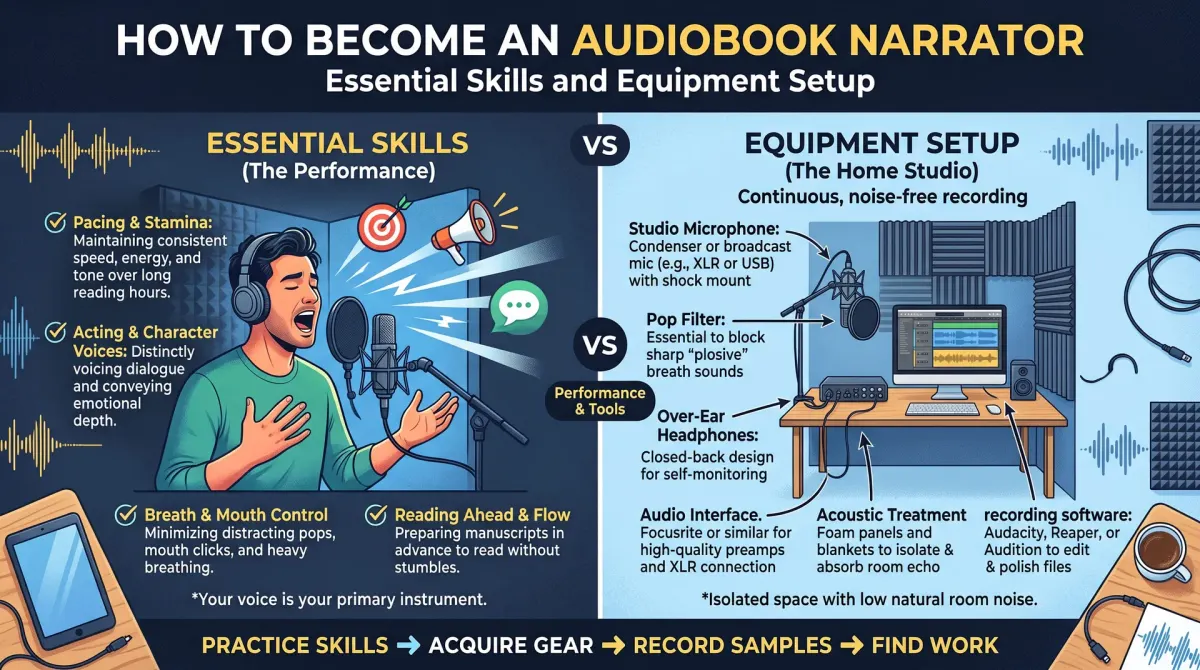
Skills to build
Key takeaway: Clear, steady reading beats a dramatic voice. Build stamina and accuracy first.
- Clear diction. Listeners must understand every word.
- Pacing. Keep a steady, natural pace.
- Preparation. Read ahead to find names, odd words and changes of tone.
- Stamina. Practise reading aloud for an hour or more.
- Character voices. Keep them consistent and not overdone.
- Consistency. The sound should match from chapter to chapter.
Practise with books in the genre you want to narrate. Record yourself, listen back and note stumbles, mouth noises and flat patches.
Set up your home studio
Key takeaway: Start with a quiet room, a decent microphone and soft surfaces. Upgrade later.
You need four things.
| Item | Why it matters |
|---|---|
| Quiet room | Low background noise and echo |
| Microphone | A good quality condenser or dynamic microphone |
| Audio interface or USB mic | Connects the microphone to the computer |
| Recording and editing software | Records, edits and exports audio |
Soft furnishings, such as blankets and thick curtains, reduce echo. Record at quiet times, and turn off fans and phones. Wear headphones to monitor the sound.
Test the setup with a short recording, and listen for hum, hiss, traffic and room echo.
Learn the audio standards
Key takeaway: Platforms reject audio that fails their technical checks. Read the current standards before you record.
ACX publishes audio submission requirements for narrators. These cover items such as volume levels, background noise, file format and silence at the start and end of each file. The numbers can change, so read the current ACX standards before you record.
Keep your recordings consistent and keep a log of the settings that pass the checks. Many narrators build a template in their software to save time.
How ACX works
Key takeaway: ACX connects authors and narrators. You audition, agree terms and deliver files.
On ACX, authors list books they want recorded. Narrators audition with a short sample. The author picks a narrator, and they agree on pay. The narrator records, uploads the files and the author reviews them. After approval, the audiobook can be sold through major audio stores, depending on the terms of the deal.
Check the current ACX terms, regions and tax rules. They are different for authors and narrators, and they change.
Pay models
Key takeaway: Compare the models before you accept. Know the hours you will spend.
| Model | How you are paid | Risk |
|---|---|---|
| Per finished hour | A fixed fee for each finished hour | Lower risk, no share of sales |
| Royalty share | A share of the book's sales | No upfront pay, depends on sales |
| Hybrid | Part fixed fee, part share | Balanced |
If you accept a royalty share, choose books with a clear audience and an author who will promote them. Work out how many finished hours the book will have, and how long you will need to record.
Make a demo and audition
Key takeaway: A short, clean demo opens doors. Match it to the genre you want.
Record one or two short samples from books in public domain or from your own writing. Show a clear, natural voice and, if you can, a couple of character voices. Keep the audio clean and within the platform's standards.
When you audition, read the sample text the author provides, and send it on time. Be polite, and keep your terms clear.
Practise in a structured way
Key takeaway: A simple weekly routine builds skill faster than random practice.
Pick a short passage, about two pages, and read it aloud three times. First, read for clarity. Second, read for pace and feeling. Third, record it and listen back. Note one thing to improve and repeat the next day.
Read different styles: a children's story, a business chapter, a thriller scene. Each needs a different tone. Mark breath points and tricky words in your copy. Keep water nearby, and rest your voice.
Join a community of narrators, if you can, to share feedback. Listen to professional audiobooks in your target genre and note how they handle pace and tone.
Plan your time and fee
Key takeaway: Count all the hours, not only the recording time.
Before you accept a job, estimate the total work. It includes reading the book, preparing, recording, editing, checking and fixing errors. A single finished hour of audio can take several hours of work. Divide the fee by your total hours to see your real hourly rate.
Start with shorter books while you learn your speed. Keep a log of your time on each project, and use it to quote the next one.
Build your voice skills
Narration is acting and stamina. Read aloud every day for a few weeks. Record yourself and listen back. Note where you rush, mumble or drop your voice at the end of sentences.
Practice different tones. Practice dialogue with small changes in pace and pitch, not heavy accents. Keep a clear, natural style.
Read a range of genres. Fiction, non-fiction and memoir ask for different pacing. Find the style you do best.
Prepare a book before you record
Preparation saves hours. Read the book first. Note character names, hard words, places and any foreign terms. Check pronunciations with reliable sources.
Mark places where the tone changes. Mark dialogue and who speaks. Decide how you will read each character.
Keep a pronunciation list. If the author is available, ask for their preferences.
Plan your recording routine
Narration is long work. Plan short sessions with breaks. Hydrate. Avoid dairy or heavy meals before long takes, if they affect your voice.
Record at the same time each day. Keep a consistent distance from the microphone. Take notes on settings so each session matches.
Listen to your first chapter fully before you record more. Fix issues early.
Edit and check the audio
Raw recordings need clean-up. Remove breaths that are too loud, mouth noise and long gaps. Keep the room tone steady.
Check against the platform's audio standards for noise, levels and format. Listen on headphones and speakers.
Proofread against the text. Fix misreads. Deliver files named as the platform asks.
Find work and set a fee
Create a demo of a few minutes in your best genre. Post it on the platform and on your site. Audition for projects that suit your voice.
When you choose a pay model, think about the hours. Narrating one hour of finished audio takes much longer than an hour. Include prep, recording, editing and checks.
Look after your voice and your name
Rest your voice. Warm up before you record. Protect your reputation: deliver on time, communicate clearly and follow the contract.
Keep copies of files and contracts. Build a small list of authors who liked your work.
Equipment: start simple
You do not need the most expensive gear. A decent microphone, a pop filter, headphones, a stable stand and an audio interface if your microphone needs one will do for a start. Recording software can be free.
The room matters more than the microphone. Choose a quiet space away from traffic and appliances. Soft materials such as curtains, rugs and blankets reduce echo. A closet full of clothes can work well.
Record a test and listen on headphones. Fix noise problems before you buy more equipment.
Pay models compared
Pay per finished hour gives you a fixed fee for the finished audio. It is easier to plan. Royalty share gives you a share of sales and may pay more or less over time. Some platforms offer a mix.
Before you accept a job, estimate your hours. A finished hour takes far longer than an hour, once you add prep, recording, editing and checks. Divide the fee by your real hours to see your rate.
Read the contract for exclusivity, deadlines and what counts as acceptable audio.
Build a demo and a small portfolio
Choose a short passage from a book in the public domain, or from your own work, in the genre you want. Record it with care. Edit it cleanly. Keep it to a few minutes.
Post the demo on your profile. Add a short bio that tells authors what you do best.
After your first jobs, add them to your portfolio with permission. Ask authors for short feedback you can quote.
Habits of working narrators
Warm up your voice before each session. Drink water. Take breaks. Keep a pronunciation log. Stop when your voice is tired.
Keep files organised, named in the way the platform asks. Meet deadlines. Communicate early if there is a delay.
Narrators who deliver clean audio on time earn repeat work.
People also ask about audiobook narrators
Do I need a professional studio to narrate audiobooks?
No, many narrators record at home. You need a quiet room, a decent microphone, an audio interface if required and recording software. Treat the room with soft materials to reduce echo. The platform sets audio standards, so check them before you buy gear.
How do audiobook narrators get paid?
Common models are pay per finished hour and royalty share. Some projects combine them. Per finished hour pays for your work whatever sales. Royalty share can pay more if the book sells, but it can pay little. Read the terms and compare with your costs and time.
Can I narrate my own book?
Yes, many authors do, especially for non-fiction and memoir. Practice reading aloud, test your recording quality and consider a trial chapter. If your voice or audio is poor, hiring a narrator may sell better. Check your platform's rules and standards.
Start small and learn
Your first job may be a short book. Treat it as practice. Ask for feedback and apply it to the next one.