What are public domain characters?
Key takeaway: A public domain character is one whose copyright has expired, but only the original version is free.
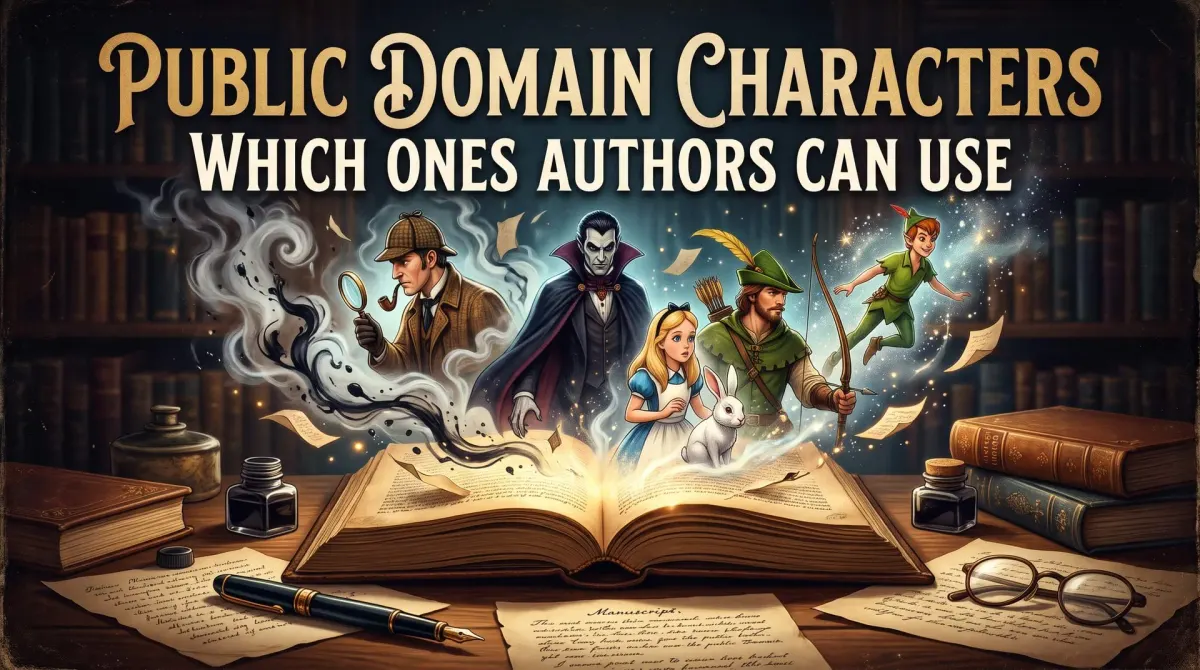
Public domain characters are fictional characters whose copyright has expired or never applied, so anyone may use them without permission. In the US, that includes characters from works published before January 1, 1931. Only the version shown in the old work is free to use.
The public domain is the set of creative works that no longer have copyright protection. Anyone can copy, adapt and sell them.
The US Copyright Office is the government office that records copyright claims. It says it does not compile or maintain a list of works that are in the public domain. A search of its records may show whether a work is still under copyright.
So no official list exists. You check each character yourself, using the date rules below.
The key point is the first version. A character is a creative element that can appear in many works over many years. Copyright runs separately for each work. Each work has its own date.
That is why one character can be free in one form and protected in another. The early version is free. The later redesign is not.
The date rule: how to work out the year
Key takeaway: Add 96 to the publication year to find the first public domain year for older US works.
The Copyright Office explains that works published before 1978 can have a total term of 95 years. Terms run through the end of the calendar year in which they expire. All US works published before January 1, 1931 are in the public domain.
The American Bar Association's Landslide magazine reports that works published in 1930 entered the public domain on January 1, 2026. The 1998 Copyright Term Extension Act set a 95-year term for older works. It expires on January 1 of the 96th year.
That gives a simple formula.
- Add 95 to the publication year. That is the last year of protection.
- Add one more year. That is the first year the work is free.
- Shortcut: publication year + 96 = first public domain year.
Here is a worked example with shown math.
- A work published in 1930: 1930 + 95 = 2025. The term ends December 31, 2025.
- It is free from January 1, 2026. Check: 1930 + 96 = 2026.
- A work published in 1931: 1931 + 96 = 2027. It is not free yet.
Use this formula for works first published in the US from 1927 to 1977 that have kept their protection. Works from other countries and later works follow other rules.
The formula tells you when the old version is free. It does not tell you about later versions, trademarks or foreign law. The next sections cover those.
Public domain characters by year
Key takeaway: Release years tell you when each early version becomes free.
This table uses the formula and facts from Duke's Center for the Study of the Public Domain. It also uses the American Bar Association article. Only the first version is free.
| Character | First appearance | Free in US |
|---|---|---|
| Winnie-the-Pooh | 1926 book | 2022 |
| Tigger | 1928 book | 2024 |
| Mickey Mouse (Steamboat Willie) | 1928 | 2024 |
| Popeye (original 1929 version) | 1929 | 2025 |
| Betty Boop, Pluto (first versions) | 1930 | 2026 |
Check each year with the formula. Pooh: 1926 + 96 = 2022. Mickey: 1928 + 96 = 2024. Popeye: 1929 + 96 = 2025. Betty Boop: 1930 + 96 = 2026. All match.
Some notes on the table.
- Winnie-the-Pooh. The 1926 book entered the public domain on January 1, 2022. Duke reports that its plot, dialogue, settings and characters, including Pooh, Piglet, Eeyore and Christopher Robin, and E.H. Shepard's original drawings, became free to use. Tigger came later, because he first appeared in 1928.
- Mickey Mouse. Is Mickey Mouse public domain? Only the earliest version. The ABA article notes that the red shorts and the high-pitched voice came later in works that are still protected.
- Popeye. The original character from 1929 is free. The spinach power came in 1931.
Public domain 2026 is the year of the newest group. Works from 1930 became free then.
Public domain superheroes and other future dates
Key takeaway: Major superheroes are not free yet. Use the formula to see when they will be.
Many authors ask about public domain superheroes. The honest answer today is that the major ones are not free. The same formula tells you when they will be.
The ABA article lists these upcoming dates.
| Character | First appearance | Free in US |
|---|---|---|
| Goofy | 1932 | 2028 |
| Donald Duck | 1934 | 2030 |
| Superman | 1938 | 2034 |
| Batman | 1939 | 2035 |
| Wonder Woman | 1941 | 2037 |
Check each with the formula: Goofy 1932 + 96 = 2028. Donald Duck 1934 + 96 = 2030. Superman 1938 + 96 = 2034. Batman 1939 + 96 = 2035. Wonder Woman 1941 + 96 = 2037.
These dates are for the first versions only. Superman, Batman and others changed over the years. Later powers, costumes and supporting characters stay protected until their own dates.
So do not write a Superman book today based on a future date. Wait until the date and then use only the early version.
Also be careful with a date that the formula gives you. Some works have special history, such as renewals or earlier foreign publication. If your project depends on a close date, check the copyright records or ask a lawyer.
Where trademark still applies
Key takeaway: Copyright ending does not end trademark rights.
Trademark is a legal right in a name, logo or brand that identifies a seller. It is separate from copyright. Trademark rights can last as long as the mark is in use.
A University of Miami law review article covers Steamboat Willie, which entered the public domain in January 2024. It says Disney still holds trademark rights in Mickey Mouse. Its summary: the public owns the earliest version, but Disney owns the brand.
Duke makes the same point for Winnie-the-Pooh. Disney keeps copyright in its later works. It also keeps trademark rights in the words "Winnie the Pooh" for many products.
The Copyright Office adds that words and short phrases, such as names, titles and slogans, are not copyrightable. But it says names, titles or short phrases may be protected by trademark law in some cases. It points readers to the US Patent and Trademark Office.
What does this mean for a book? A story that uses an early public domain character is generally safer than one that uses a brand logo. A cover that looks like a company's brand image is riskier. Avoid anything that suggests the book comes from the trademark owner.
How to check if a character is public domain: steps
Key takeaway: Check the first work, the date, later versions and trademarks, in that order.
Follow these steps before you write.
- Find the character's first published work.
- Note the first publication year.
- Add 96 to get the free year.
- Confirm the work was published in the US.
- List the traits from the early work only.
- Check for later versions you must avoid.
- Search for active trademarks on the name.
Step four matters. The rules differ for works from other countries. A work first published abroad may follow different terms.
Step five keeps you safe. Make a list of what appears in the first work: the name, the look, the personality and the plot. Use only those elements. Do not borrow a later outfit or a later power.
Step seven is a quick check. Search the name in the US Patent and Trademark Office database. A live trademark does not stop you from telling a story, but it limits how you brand a product.
Keep your notes. If a question comes up later, you can show what you used and why.
For a book, also add a short note on the copyright page. A line such as "Based on characters from a public domain work" helps readers and shows your care.
People Also Ask
Is Mickey Mouse public domain?
Only the earliest version is. Steamboat Willie entered the US public domain in January 2024. Later features, such as red shorts and the high voice, came in works that are still protected. Disney also keeps trademark rights in Mickey Mouse as a brand, so do not use the character as a logo.
What public domain characters entered in 2026?
Works published in 1930 entered the US public domain on January 1, 2026. The American Bar Association reports that the first versions of Betty Boop and Pluto are among them. The group also includes books such as The Murder at the Vicarage. Only the early versions are free to use.
Can I sell a book that uses a public domain character?
Generally yes, if you use only elements from the old work and avoid protected later versions and trademarks. Check the date, the country of first publication and any active trademark. You cannot claim copyright in the old material itself. This is general information, so ask a lawyer for your case.
Common mistakes
Key takeaway: Most mistakes come from using later versions and ignoring trademarks.
- Assuming the whole character is free.
- Using a later outfit, power or voice.
- Ignoring trademarks on the name.
- Trusting a date without checking the country.
- Using a logo-style cover that copies a brand.
Your next step: check one character today
Pick the character you want. Find the first work and use the formula. Write down what appears in that work only. Then search the name for trademarks.
When your plan is clear, check how copyright will apply to your own new book.
Sources
- US Copyright Office: Duration of Copyright
- US Copyright Office: Circular 15A, Duration of Copyright
- US Copyright Office: Can I use someone else's work?
- US Copyright Office: Circular 33
- American Bar Association Landslide: Celebrating the Public Domain
- Duke Center for the Study of the Public Domain: Public Domain Day 2022
- University of Miami Business Law Review: Trademark's Role After Copyright Expiration