Pick by goal first
Key takeaway: Start with the reason you are reading. The reason narrows the choice faster than any ranking.
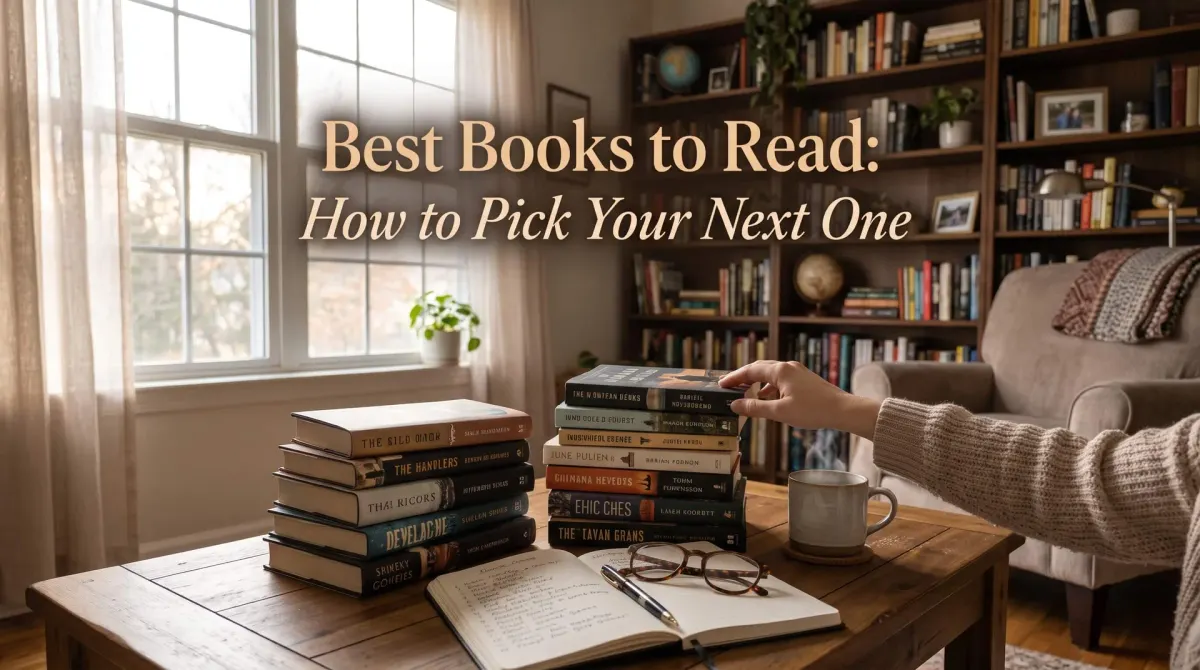
The best books to read are books that fit your current goal, taste and mood. A good pick delivers what you want from it, whether that is escape, knowledge or craft ideas.
Match goal to type
| Goal | Type of book | Look for |
|---|---|---|
| Relax | Light fiction | Fast plot, warm tone |
| Learn | Narrative non-fiction | Clear structure, sources |
| Grow | Self-help or memoir | Honest voice, real examples |
| Write better | Craft books, genre novels | Strong prose in your genre |
Add genre and mood
Pick one genre you enjoy. Add a mood, such as tense, gentle or funny. Add a length. A short book suits a busy week. A long one suits a holiday.
Where to find reliable picks
Key takeaway: Use two or three sources and compare. Do not rely on one list.
Libraries offer staff picks and reader help. Reading sites show reviews by genre. Award lists show books that judges rated highly. Friends who share your taste are often the best source.
Our guide on recommendations explains how to ask for suggestions and test them fast.
Read like a writer
Key takeaway: Reading for craft means asking why a passage works. This builds skill faster than reading alone.
Authors learn from the books they read. Choose books in your own genre. Notice how the best ones open, build tension and end.
A simple craft method
- Read a chapter for pleasure.
- Reread the first page and mark the hook.
- Note how the author reveals character.
- Track where tension rises and falls.
- Write one sentence on what you will try in your own book.
What to track
| Element | Question to ask |
|---|---|
| Opening | What makes you keep reading? |
| Pace | Where does it speed up or slow? |
| Voice | Which words give it a personality? |
| Ending | What feeling does it leave? |
Use this method on three books in your genre. You will see patterns that apply to your own draft.
Build a reading plan you can keep
Key takeaway: A plan with a small number of books beats a long wish list.
Say you read 20 pages a day. A 300-page book takes 15 days. That is about 24 books a year. A plan of 12 to 24 books is realistic.
| Pages per day | Days per 300-page book | Books per year |
|---|---|---|
| 20 | 15 | about 24 |
| 40 | 7.5 | about 48 |
Mix your list. Pick one for pleasure, one for learning and one for craft. Rotate them so reading stays fresh.
If you are an author, your reading also shapes your marketing. Know the books your readers love.
Common mistakes
- Copying a list blindly. A list built for others may not fit you.
- Forcing a finish. Drop a book that fails the sample test.
- Ignoring your genre. Writers learn most from their own shelf.
- Hoarding titles. A long list adds stress.
- Skipping reviews that disagree. They show who a book is not for.
People Also Ask
How do I choose the best book to read?
Decide your goal first. Then pick a genre and mood. Read a 20-page sample. If the voice and pace suit you, continue.
What should writers read?
Writers should read widely in their own genre. They should also read a few craft books. Reading with questions in mind builds skill.
Where can I find free book lists?
Public libraries, reading sites and award pages offer free lists. Staff at your library can also give personal picks.
Choose your next book today
Name your goal. Pick one genre and mood. Read one sample tonight. Then decide.
Writers can add one step: note one lesson for their own draft.