What a proposal is for
Key takeaway: A proposal answers one question for the buyer: why will this book sell, and why are you the person to write it?
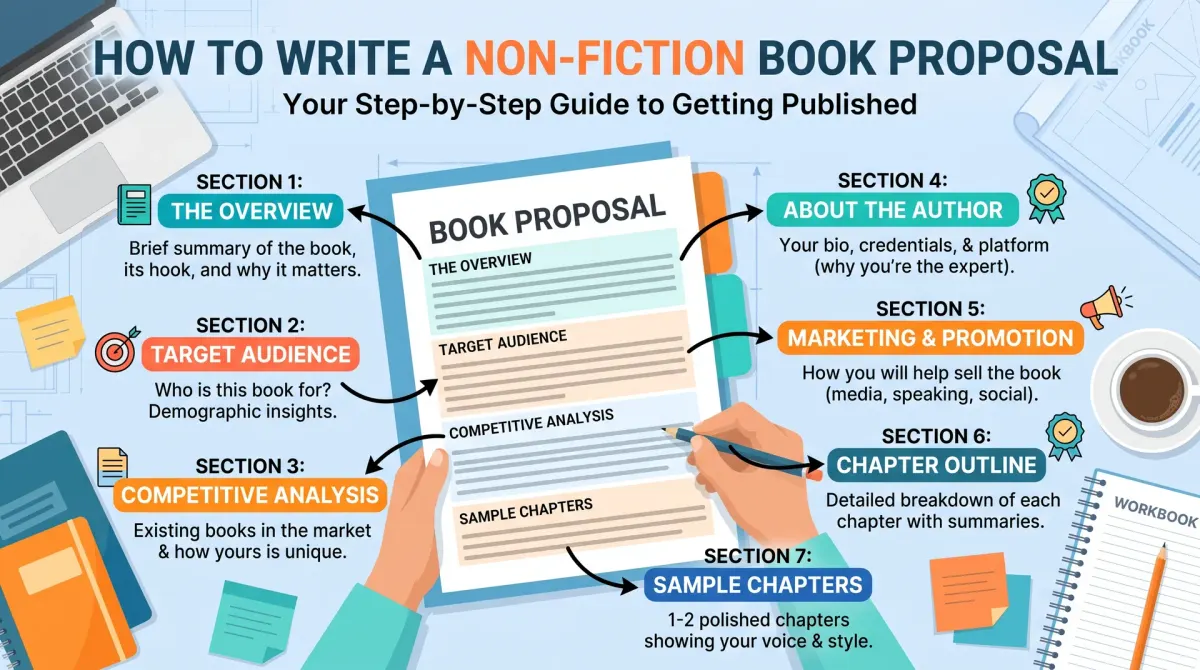
A book proposal is a business document that sells a non-fiction book to an agent or a publisher before it is finished. It describes the idea, the market, the author's platform, the chapter outline and sample chapters, and it shows why the book will find readers.
An agent or editor has to say yes to a book before the publisher spends money on it. The proposal helps them decide. It shows the idea, the reader, the competing books, your credentials and your plan to reach readers.
It also works for you. Writing a proposal forces you to test your idea. If you cannot describe the reader or name similar books, the idea may need more work.
The sections to include
Key takeaway: Most proposals follow the same order. Follow each submission guide exactly.
| Section | What it covers |
|---|---|
| Overview | The book in a page: the problem, the promise and the hook |
| About the book | Format, length, delivery date and special features |
| Market analysis | Who will buy it and why |
| Comparable titles | Similar recent books and how yours differs |
| Author bio | Your credentials and why you are the right author |
| Author platform | Your audience, email list, speaking and media |
| Marketing plan | What you will do to promote the book |
| Chapter outline | A paragraph for each chapter |
| Sample chapters | Usually one to three chapters |
Read each agent's guidelines. Some ask for fewer sections or a different order.
Write the overview
Key takeaway: The overview is the most important page. Make the reader want to read more.
Start with the problem your reader faces. Then state your book's promise in one sentence. Explain how your book solves the problem in a way no other book does. Add one or two lines about the reader and the length.
Write it so a busy agent can understand the whole idea in a minute. Avoid hype and vague words. Use specific nouns, clear verbs and concrete benefits.
Show the market
Key takeaway: Name real readers and real books. A vague market suggests a vague book.
Describe who will buy the book, with numbers if you can find reliable ones. Cite your sources. Do not invent figures. For comparable titles, list recent books in your category, with title, author, publisher, year and a one-line note on how yours differs. Avoid listing huge bestsellers as comparisons, because they suggest unrealistic expectations.
Pick books from the last few years, so the market looks current. Be fair to them, and explain what gap your book fills.
Describe your platform
Key takeaway: Platform is your existing reach. List it with honest numbers.
Platform means the ways you can reach readers. It may include an email list, a social following, speaking events, a podcast, a business with customers, a column or media contacts. State the numbers clearly and truthfully. If your platform is small, say how you will grow it, and describe the connections you already have.
For publishers, platform is a sign that you can help sell the book. For a self-published book, it shows the audience you can start with.
Chapter outline and samples
Key takeaway: The outline proves the book is planned. The samples prove you can write.
Write one short paragraph for each chapter. Say what the reader learns and what examples or stories you will use. Keep the order logical, from first steps to advanced ideas.
Choose sample chapters that show your best writing and strongest idea. The first chapter is the usual choice. Edit them carefully, since they are the part the agent will judge the most.
Before you send it
Key takeaway: Follow the rules, proofread and send it to the right people.
Check each agent's submission page for the format, the length and how to send. Proofread for typos and consistent names. Ask a trusted reader to review it. Send it only to agents who represent your type of book.
Expect waiting and rejection. Keep a list of who you sent it to and when. If you get feedback, use it to improve the proposal.
A worked example of an overview
Key takeaway: A strong overview names the reader, the problem and the promise in a few lines.
Here is a pattern with placeholder details. "Many new freelancers struggle to price their work, and most books on the topic are written for large agencies. [Title] is a practical guide for solo freelancers. It gives a simple pricing method, with templates and worked examples, so readers can set fair rates within a week. The book will be about 55,000 words, with exercises at the end of each chapter."
Notice what it does. It names the reader, states the problem, makes a clear promise and gives the length. Use this shape for your own book, and replace each part with your real details.
Common proposal mistakes
Key takeaway: Most weak proposals fail on the market section or the platform section.
- Saying "everyone" will buy the book.
- Listing only giant bestsellers as comparisons.
- Inflating platform numbers.
- Sending sample chapters that are rough.
- Ignoring the agent's submission rules.
- Writing the proposal as a long essay instead of clear sections.
Fix these before you send, and your proposal will stand out for the right reasons.
Start with a one-sentence promise
Before you write a page, write one sentence that says what the book does for whom. For example, "This book helps new managers run their first team meeting." A clear promise guides every section.
Test it with two people who match your reader. Ask whether they would want the book. If they hesitate, refine the promise.
Put this sentence at the top of your overview.
Research comparable books
Agents want to see that you know the shelf. Choose a few recent books that are similar but not the same. Note the title, author, publisher and year. Write one line on how yours differs.
Avoid saying there are no competitors. It suggests no demand or no research.
Check publisher and sales information from reliable sources. Do not guess.
Describe the audience with care
Write who will buy the book and why. Describe the reader's job, age or interests only if they matter to the topic. Name where readers gather, such as groups, events or publications.
Use verified facts for any numbers. Cite the source. If you cannot confirm a figure, leave it out or flag it for checking.
Avoid vague claims such as "everyone will want this".
Show your platform honestly
Your platform is your ability to reach readers. It may be an email list, a speaking record, a website, a social audience or professional standing.
Use real numbers if you have them, and update them before sending. If your platform is small, say what you are doing to grow it and show your plan.
Publishers also value credibility. Include relevant experience and past work.
Write the chapter outline
Give one short paragraph per chapter. Say what the chapter covers and what the reader will learn. Show the flow from start to finish.
Keep the outline consistent with your promise. If a chapter does not serve it, cut it.
Add the planned length and delivery date.
Polish the sample chapters
Sample chapters show your writing. Choose your strongest, often the first. Edit them with extra care. Read aloud. Ask a trusted reader for feedback.
Make sure the voice matches your overview. A proposal with great promises and weak samples will not succeed.
Check before you send
Check each agent's submission guidelines. Follow the format and file type. Personalise your query. Proofread everything.
Track where you send it and when. Expect to wait.
A worked example of an overview
Here is the shape of a good overview, with invented details. It opens with a hook: a common problem the reader faces. It states the promise: what the book helps them do. It names the method: how the book works. It ends with the author's credibility and the planned length.
For example: "New managers hold their first team meeting with little training. This book gives them a simple plan they can use that week. It is built around short chapters and ready-made agendas. The author has trained managers in her field for years."
Keep your own overview to a page or two, and avoid hype words.
Common proposal mistakes
Common mistakes include a vague audience, too few comparable books, inflated numbers, a weak platform section and long, unfocused samples.
Another is to ignore submission rules. Agents have set formats. A proposal that does not follow them may not be read.
A third is to send an unfinished sample. Edit until it is ready. Ask a reader to check your proposal for clarity.
What happens after you send it
An agent may reply with questions, ask for changes, or decline. Expect a wait. Keep working on your platform and writing while you wait.
If you receive feedback, take it seriously, and improve the proposal. If many agents decline, review the idea and the pitch, or consider self-publishing.
Keep your proposal honest
A proposal should promise only what you can deliver. Do not inflate numbers or claim endorsements you do not have. Agents check, and trust matters.
If your platform is small, say so and explain your plan. If your idea has competitors, name them and explain your difference.
Honest proposals that show clear thinking and good writing are more likely to be taken seriously.
People also ask about book proposals
How long should a book proposal be?
It varies, but many proposals run from a dozen to several dozen pages, plus sample chapters. Follow the guidelines of each agent or publisher. Keep it clear, avoid padding and make every section show a reason why the book will sell.
Do I need a book proposal to self-publish?
No. A proposal is for agents and publishers. If you self-publish, a short plan can still help you clarify the reader, the market and the outline. You can use proposal sections as a planning tool for your own project.
What do agents look for in a proposal?
They look for a clear idea, a defined reader, proof of demand, a credible author and strong writing. They also look at your platform, such as an audience or expertise. Show facts, name comparable books and follow their submission rules.
Use the proposal as a plan
Even if you decide to self-publish, the proposal gives you a clear view of the reader, the market and the book. It is useful in either case.