What a character name generator does
Key takeaway: A generator gives you raw options. Your job is to choose names that fit the story.
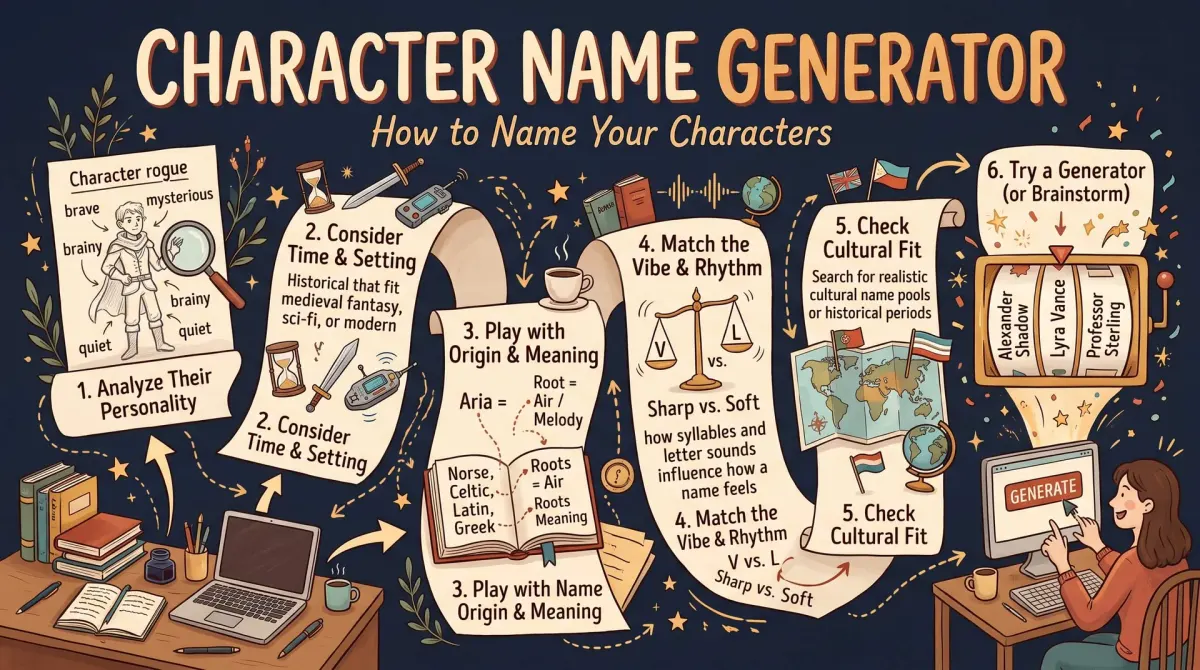
A character name generator is an online tool that suggests names for fictional characters. You pick a genre, culture, gender or style, and it returns a list. It creates ideas quickly, but it cannot tell whether a name suits your story, era or cast.
Most generators work in three ways. Some pull from real name lists by culture. Some mix syllables to make new names, which suits fantasy. Others use AI to match a short character description.
Each has a use. Real-name lists help with contemporary and historical fiction. Syllable mixers help with invented worlds. AI tools help when you can describe a personality.
However, no tool knows your plot. It does not know your hero is the only one with a short name. It also cannot see that two minor characters share a first letter.
Here is a quick guide:
| Generator type | Best for | Watch out for |
|---|---|---|
| Real-name list | Modern and historical | Names from the wrong era |
| Syllable mixer | Fantasy and sci-fi | Hard-to-say results |
| AI description | Matching personality | Repeated common names |
Use any of them as a starting point, not as the answer.
Character name ideas: build your own list
Key takeaway: A short, targeted list beats a thousand random names. Set rules first, then collect.
Before you open a tool, define the facts about your world. A name that fits one place and time may be wrong for another.
Write down:
- Setting: country, region and year
- Culture and family background: where the family came from
- Age: names change in popularity over decades
- Tone: gentle, harsh, comic or serious
- Role: hero, rival, mentor or minor helper
Then collect 20 to 30 character name ideas for each main role. Use a mix of tools and sources. Baby-name lists, census records, school class lists and historical records are good sources.
Next, count your combinations. If you have 10 first names and 10 surnames, you can create 10 × 10 = 100 full names. Scan them and mark the best ones. Most will not fit. A few will.
Give the main character a name that is easy to read and say. You will type it thousands of times. Readers will also see it on every page.
For minor characters, shorter and simpler names help. They should not compete with the lead.
Four checks for every character name
Key takeaway: Run each name through four checks. A name that passes all four is safe to use.
A character name is the label that readers use for a person in your story. A good one carries meaning, sound and mood. Use these four checks.
1. Fit. Does the name suit the setting, culture and age? A 1920s farmer is less likely to be named "Jaxon" than "Walter."
2. Sound. Say it aloud with the surname. Does it flow? Does it rhyme by accident, like "Rose Moses"? Does it hide a joke?
3. Clarity. Can readers tell this name from the others? Avoid names that look alike, such as "Dana" and "Dena." Avoid shared first letters in the main cast.
4. Meaning. Does the name carry a hint? Some writers pick a name with a quiet link to the character's role or past. This works best when it is subtle.
After these four checks, search the full name online. If it belongs to a famous real person, a known fictional hero or a brand, change it. Using real people's names can create legal questions, so ask a qualified lawyer if you are unsure.
Also check for unintended meanings in other languages. A quick search can save embarrassment.
Keep a cast sheet to avoid similar names
Key takeaway: A cast sheet lets you see every name at a glance. Use it before you finalise any new name.
A cast sheet is a simple table that lists every named character in your book. It is one of the easiest ways to catch repeated sounds and letters.
| Name | Role | First letter |
|---|---|---|
| Mara Quinn | Hero | M |
| Tobias Reed | Mentor | T |
| Ines Vallo | Rival | I |
Add columns for age, appearance and a one-line note. Then scan the first-letter column. If three names start with the same letter, change one.
Try a simple count. Suppose your book has 8 named characters. If 3 start with "M," that is 3 ÷ 8 = 37.5 percent of the cast. Most readers will blur them. Aim for each initial to appear only once in your main cast of 5 to 6 people.
Also check name length. If every name has two syllables, the cast feels flat. Mix short and long names for variety.
Update the sheet every time you add a character. It also helps when you revise, because you can find all references to a name quickly.
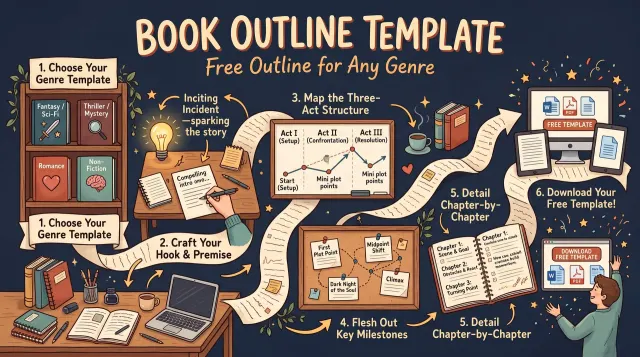
A cast sheet is a good companion to your outline. Our outline guide shows how to organise the rest of your story plan.
Names for fantasy, anime-style and historical stories
Key takeaway: Different genres need different naming rules. Keep each world consistent.
Genre shapes naming. Readers expect a certain feel, and consistency matters more than invention.
Fantasy. Invented names should follow patterns. Choose a sound set for each culture. For example, one people may use soft vowels, another harder consonants. Keep names easy to say. If readers cannot pronounce a name, they may skip it.
Anime-style stories. An anime character name generator often draws on Japanese naming patterns. Use care. Japanese names follow cultural rules, and kanji carry meaning. Research a name's meaning and order, and consider asking a reader who knows the language.
Historical fiction. Check what names were common in that place and decade. Census data, church records and old newspapers help. Avoid modern names unless you want a clear contrast.
Science fiction. You can mix cultures, since future societies may blend. State the rule in your world notes so names feel intentional.
Contemporary fiction. Use sources such as school lists and public name data to match age and region.
Keep a note of each world's naming rules. In a long series, you will need them again.
Names, rights and publishing
Key takeaway: Character names are usually not protected on their own, but real people and brands can cause trouble.
Names alone are usually hard to protect. However, a well-known character with a full identity may be protected. Using a famous character's name or world can be an issue.
Be careful in three cases:
- Real people: Using a real person's full name in a negative role may cause problems.
- Brands: A name that matches a company may invite complaints.
- Existing characters: A name tied to a famous character can confuse readers.
If your story is based on real events, change names unless you have permission. A short note that your characters are fictional is common, but it is not a legal shield by itself.
When you publish, your character names also appear in your book description and keywords. Use them carefully. Our metadata checker can help you review the fields before you submit.
Keep names consistent across a series
Key takeaway: In a series, names must stay consistent and easy to track across books.
Long series add new characters in every book, so plan early. A small system prevents slips.
- Fix the spelling of each name. Choose one form and keep it.
- List nicknames and titles next to each name, such as "Captain Reed."
- Record family links in a simple tree.
- Add a pronunciation note for unusual names.
- Mark which names are used, so you do not reuse them for minor characters.
If you plan an audiobook, say each name aloud before you commit. A narrator must pronounce it every time. Our audiobook guide covers narrator skills and setup.
Share the name list with your editor. They can catch slips such as "Elena" in one chapter and "Elaine" in another. Keep the cast sheet in one shared file so everyone uses the same spelling.
People Also Ask
How do I choose a good character name?
Match the name to the setting, age and culture. Say it aloud with the surname. Check that it looks different from other names in the cast. Search the full name online to avoid real people and famous characters. Then pick the name that fits the personality.
How many characters should a novel have?
There is no fixed number. Many novels have a small main cast of three to six people plus minor characters. Give names only to those who matter. A passing shopkeeper can stay unnamed. More names mean more for readers to remember.
Can two characters have the same name?
You can, but it is risky. Readers may confuse them. If it is intentional, such as a father and son with the same name, give them clear nicknames or titles. Otherwise, change one name so each character is easy to tell apart.
Common mistakes
- Using names from the wrong era. Check what was common in that place and time.
- Giving many characters the same initial. It blurs the cast on the page.
- Choosing hard-to-read fantasy names. Readers may stop trying to say them.
- Picking the first generator result. Test several options.
- Skipping a quick search. A name may match a real person or brand.
Name your cast, then build your outline
Key takeaway: A finished cast sheet makes your outline faster.
Create a cast sheet today. List every named character, add roles and check initials. Then start your outline, since plot and character work best together.
When your book is ready, check the official platform help pages for the rules on titles and descriptions.