The main ways to get a book published
Key takeaway: There are three routes: traditional, small press and self-publishing. Each trades control, speed and cost.
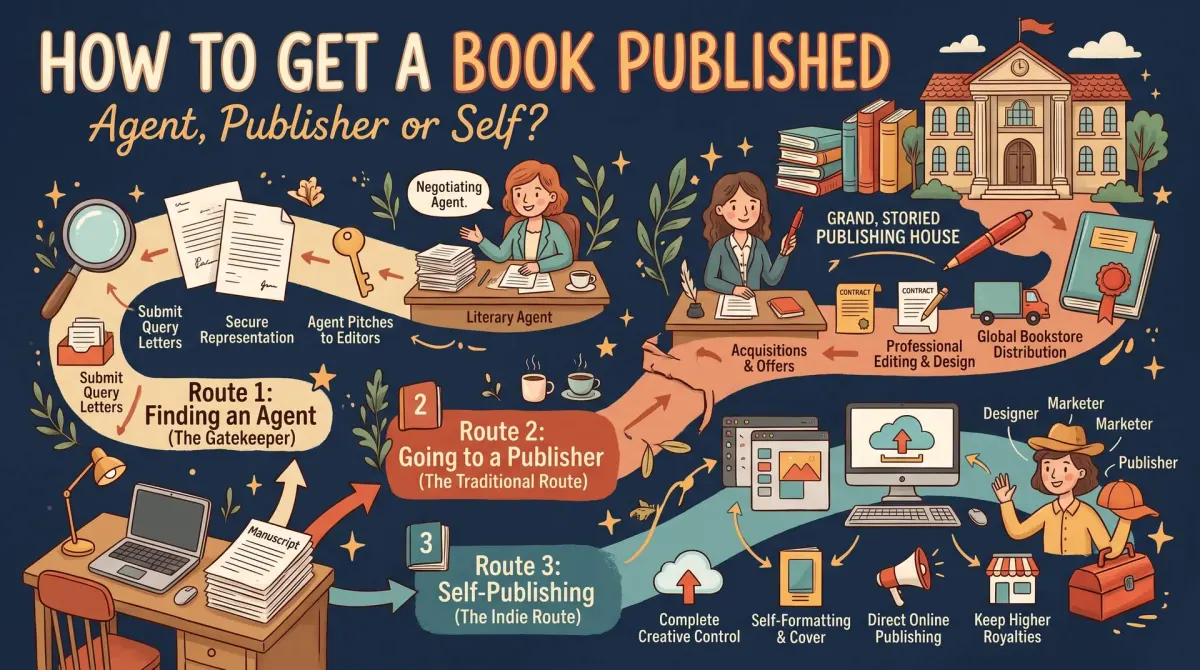
How to get a book published is the process of moving a finished manuscript into readers' hands. You can use an agent and publisher, a small press, or self-publishing. Each route has different steps, costs and levels of author control. You choose by goal, budget and patience.
Many people ask how do you get a book published. The honest answer is that it depends on the route. Here are the three.
Traditional publishing. You find a literary agent, who sells your book to a publisher. The publisher pays for editing, design and printing, and may pay an advance. An advance is money paid to an author before sales, which is later offset by earned royalties.
Small press. Some smaller publishers accept direct submissions without an agent. Check each press's guidelines.
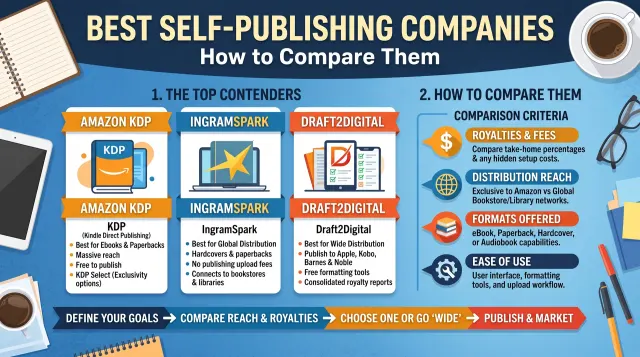
Self-publishing. You publish the book yourself through platforms such as Amazon KDP. You pay for editing and covers, but you keep control and rights.
| Route | Who pays for production | Control |
|---|---|---|
| Traditional | Publisher | Lower |
| Small press | Press | Medium |
| Self-publishing | Author | Highest |
Hybrid publishers, who charge authors fees, also exist. Check them carefully. Our comparison guide covers all routes in more depth.
Check if your book is ready
Key takeaway: Submitting too early is the most common mistake. Check your manuscript before you send it.
Many writers ask how hard is it to get a book published. Much of the difficulty comes from sending work that is not ready. Fix this first.
Use this readiness checklist:
- The manuscript is complete and revised at least twice.
- A fresh reader has given you honest feedback.
- The text is edited for typos and clarity.
- You can describe the book in one sentence.
- You know the genre and the target reader.
- You have checked the word count for your genre.
For fiction, agents usually want a finished novel. For non-fiction, they often ask for a proposal and sample chapters. Read our proposal guide if you write non-fiction.
Next, prepare your materials:
- Query letter: a short pitch, usually one page
- Synopsis: a summary of the plot or content
- Sample pages: the opening chapters
- Author bio: a short note about you
Read the submission rules for each agent or press. Follow them exactly. A well-prepared submission shows you are professional.
Allow time for polishing. Many writers spend weeks on the query letter alone.
How to write a book and get it published (traditional route)
Key takeaway: The traditional route is slow and selective. It rewards patience and preparation.
If you want a big publisher, you usually need an agent. An agent is a professional who represents authors, pitches books to publishers and negotiates deals.
Follow these steps:
- Finish and polish your manuscript.
- Research agents who represent your genre.
- Write a query letter and synopsis.
- Send queries following each agent's rules.
- Track replies and responses.
- Revise based on feedback if offered.
- Sign with an agent, who then submits to publishers.
Research matters. Look at the acknowledgements of books like yours, check the Association of Authors' Representatives and use agency websites.
Expect rejection. Most queries receive no reply or a form rejection. That is common, not personal. Keep a list and send in small batches so you can improve your letter.
Reputable agents earn a commission when your book sells. They do not charge reading fees. If an agent asks for money up front, treat it as a warning sign.
Here is a sample calculation. Assume a $10,000 advance and a 15 percent commission. The agent earns 10,000 × 0.15 = $1,500, and you receive $8,500 before taxes. These numbers are samples, so check your own contract.
Timelines are long. After a deal, production often takes a year or more.
Get a book published without an agent
Key takeaway: Some small presses accept direct submissions. Check each press carefully.
Not every publisher needs an agent. Small and independent presses sometimes accept unagented submissions. Check each press's website for open calls.
Look at the press's list of books. Does your book fit? Read the guidelines and send exactly what they ask for.
Before you sign anything, check:
- Who pays for editing, cover and printing?
- What rights does the press take, and for how long?
- What royalty rate do they offer?
- How will they distribute and market the book?
- Can you get your rights back?
A real publisher invests in your book. If a company asks you to pay a large fee, it may be a hybrid or vanity press. Read the contract and consider asking a qualified lawyer or an authors' organisation.
Writer Beware, run by the Science Fiction and Fantasy Writers Association, tracks common scams.
Also compare the offer with self-publishing. If you can do the same yourself at lower cost, the press must offer something extra, such as strong distribution.
How to get a book published on Amazon (self-publishing)
Key takeaway: Self-publishing is fast and gives you full control. You manage costs and marketing.
Many authors choose to publish themselves. It is the fastest route, and you keep the rights.
If you want to know how to get a book published on amazon, use Amazon KDP. It supports ebooks and paperbacks. Setup has no fee.
The process looks like this:
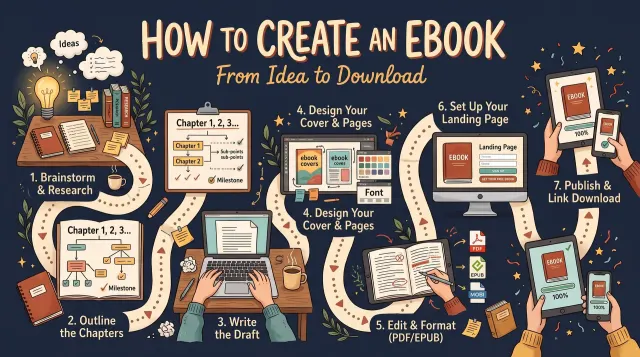
- Prepare and edit your manuscript.
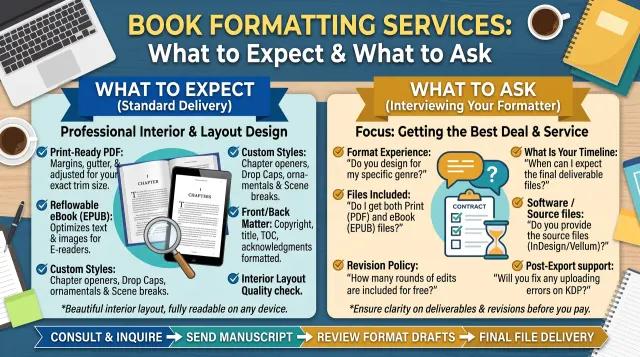
- Format the interior for ebook and print.
- Create or buy a cover.
- Write a description and choose categories.
- Upload your files to KDP.
- Set prices and publish.
Our step-by-step guide covers each stage.
Also look at how to get a book published for free. The platform itself is free, but editing, covers and ads cost money. You can reduce costs by learning simple tools. If you want to know how to get a children's book published, note the extra steps, such as illustration.
Check the official KDP help pages for current rules.
Costs and timelines at a glance
Key takeaway: Compare cost, time and control before you choose.
People ask how much does it cost to get a book published. They also ask how long does it take to get a book published. The answer differs by route.
| Route | Cost to author | Typical speed |
|---|---|---|
| Traditional | No production fees | Often a year or more |
| Small press | Usually none | Months to a year |
| Self-publishing | Your own costs | Weeks to months |
Self-publishing costs vary with your choices. Editing, a cover and formatting are the main items. Our cost guide helps you build a budget.
Time varies too. The writing itself comes first. Then querying can take months. Self-publishing can be done in weeks if the files are ready.
Choose based on your goal. If you want bookstore shelves and a big team, try traditional publishing. If you want speed and control, consider self-publishing.
Build your platform while you wait
Key takeaway: Use waiting time to build readers. It helps on every route.
Querying and production take months. Use that time well.
- Start a simple author website with a contact page and an email sign-up.
- Write a short author bio you can reuse.
- Share your writing journey where your readers spend time.
- Join a writers' group and trade honest feedback.
- Draft your next book. Agents like authors who have more to offer.
Publishers often ask what reach you have. Real readers help your case, but you do not need a huge following. A small, active list is a good sign.
For self-publishers, platform work is part of the launch. Build the list before the book is ready.
Keep records of every submission: the date, the agent and the reply. A simple sheet is enough. Follow up only when the guidelines allow it.
Set a calendar too. Block time each week for research, writing and submissions. Aim for a fixed number of queries each month, such as five. Small, steady steps keep you moving through rejections.
People Also Ask
How hard is it to get a book published?
Traditional publishing is selective, and most queries receive rejections. Self-publishing is easier to start, though selling copies takes effort. Difficulty depends on your route, genre and manuscript quality. A polished manuscript and a clear pitch improve your chances in either case.
Do I need an agent to publish a book?
You need an agent for most large publishers, but not for every route. Some small presses accept direct submissions. You can also self-publish without an agent. Choose based on your goals and check any contract carefully before you sign. Take your time.
How much does it cost to publish a book?
Traditional publishers cover production costs. Self-publishing platforms like Amazon KDP have no setup fee, but you pay for editing, covers and marketing. Hybrid publishers charge fees. Costs vary widely, so compare quotes and read contracts before you commit. Ask what each fee covers.
Common mistakes
- Querying too early. Revise and edit first.
- Ignoring submission rules. Follow each agent's or press's guidelines.
- Paying fees to agents. Reputable agents do not charge reading fees.
- Signing without reading. Check rights, royalties and exit terms.
- Choosing a route by hype. Match it to your goals.
Pick your route and take the next step
Key takeaway: Choose one route and take one step this week.
Decide what matters most: speed, control, support or reach. Then pick a route. If you choose self-publishing, work through the checklist before you hit publish.
If you choose the traditional path, draft your one-sentence pitch and list ten agents to research.