What is a trope?
Key takeaway: A trope is a familiar pattern that readers know on sight.
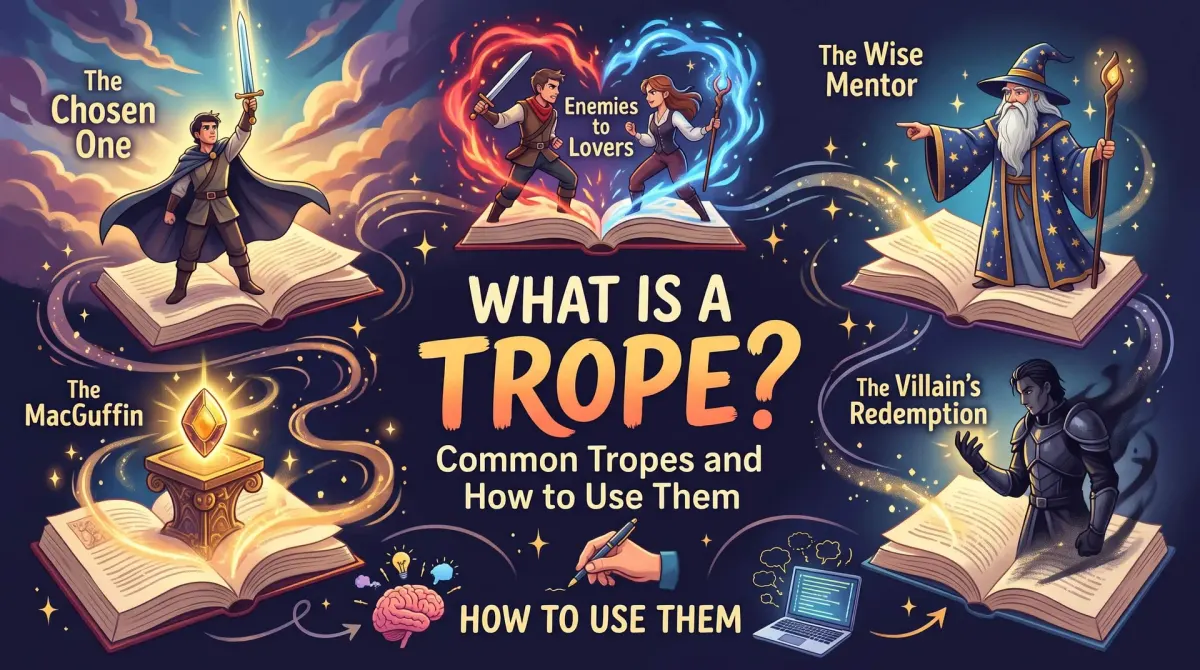
A trope is a recurring pattern, device or situation in storytelling that readers recognize quickly. It may be a character type, a plot setup or a story device. Tropes are neutral tools. They help readers know what to expect, and writers can use, twist or avoid them.
The word comes from the Greek word for "turn." In older writing it meant a figure of speech. Today most people use it for a story pattern.
Merriam-Webster lists both senses.
A trope tells readers what kind of ride they are in for. A "chosen one" story promises a hero with a special fate. An "enemies to lovers" story promises tension that turns to romance. Readers pick books for those promises.
Tropes come in three main forms:
- Plot tropes. Patterns of events, such as a heist or a quest.
- Character tropes. Types of people, such as the mentor or the rogue.
- Device tropes. Tools of storytelling, such as a red herring or a flashback.
Tropes are not rules. They are options. A writer may follow one, twist one or break one.
They also tie to genre. Each genre has a set of familiar tropes. A guide to genres explains how readers expect certain features.
Trope vs cliche vs archetype
Key takeaway: A cliche is a worn-out trope. An archetype is a deep, universal pattern.
These three terms overlap. They differ in age and freshness.
| Term | Meaning | Feel |
|---|---|---|
| Trope | A common pattern | Neutral |
| Cliche | An overused trope | Tired |
| Archetype | A universal character or pattern | Deep |
An archetype is an old, universal pattern, such as the mentor, the trickster or the hero. Archetypes run through myths from many cultures. Tropes are more specific. "The wise old wizard" is a trope built on the mentor archetype.
A cliche is a trope that has lost its spark. The reader sees it coming from far away. "It was all a dream" is a famous example. A cliche is not wrong by law. It just risks boredom.
The line between a trope and a cliche is fuzzy. A trope becomes a cliche when readers have seen it too often with no change. A fresh twist can bring it back to life.
Here is a quick test. Ask whether you can guess the next three beats. If you can, the trope may be worn. If you cannot, you may have made it new.
Tropes also shape characters. A guide to character roles shows how types relate.
Common story tropes by type
Key takeaway: Tropes cluster by genre. Knowing them helps you meet reader hopes.
Here are widely used tropes. Lists vary by source, and readers add new names all the time.
Character tropes
- The mentor who guides the hero
- The chosen one
- The reluctant hero
- The rogue with a heart of gold
- The villain with a tragic past
Plot tropes
- The quest
- The heist
- The fish out of water
- The secret identity
- The training montage
Romance tropes
- Enemies to lovers
- Friends to lovers
- Slow burn
- Fake relationship
- Second chance
Device tropes
- The red herring
- The unreliable narrator
- The plot twist
- The ticking clock
- Chekhov's gun, where a detail shown early must matter later
Readers often love these. A familiar trope gives comfort. It also lets the writer skip long setup. The reader already knows the shape.
Even so, a list is only a starting point. Pick tropes that fit your theme. A story about trust may use "found family." A story about ambition may use "rise and fall."
A tropes list also helps with marketing. Many readers search by trope. Naming two or three in your description can reach them.
Tropes in different genres
Key takeaway: Each genre has its own set of tropes, and readers expect them.
Readers pick genres partly for their tropes. A mystery reader expects a puzzle and a gathering of suspects. A fantasy reader expects a quest or a hidden power. A romance reader expects a central love story with a satisfying end.
Here is a quick map:
- Mystery. The locked room, the red herring, the final reveal.
- Fantasy. The chosen one, the dark lord, the magic school.
- Science fiction. The rogue AI, the generation ship, first contact.
- Thriller. The ticking clock, the double agent, the innocent on the run.
- Horror. The cursed house, the final survivor, the creeping dread.
You can mix genres by mixing tropes. A romantic fantasy may pair a quest with a slow burn. The blend should feel natural. Pick tropes that share a mood.
Check what readers say about books like yours. Reviews often name the tropes readers enjoyed or disliked. This research costs nothing and shows you what the market expects.
If you are still deciding what shelf your book belongs on, a plain list of genres can help.
How many tropes should a book use?
Key takeaway: Use one lead trope and one or two support tropes. Too many blur the story.
Most articles stop at lists. A balance check helps you decide how many to use.
Here is a worked example for an 80,000-word romance. You plan three tropes:
- Lead trope: enemies to lovers (60 percent of the focus)
- Support trope: slow burn (25 percent)
- Support trope: second chance (15 percent)
Add the shares: 60 + 25 + 15 = 100 percent.
Turn the shares into words:
- Enemies to lovers: 80,000 × 0.60 = 48,000 words
- Slow burn: 80,000 × 0.25 = 20,000 words
- Second chance: 80,000 × 0.15 = 12,000 words
Total: 48,000 + 20,000 + 12,000 = 80,000 words.
The numbers are a planning idea, not a rule. Tropes overlap, so scenes serve more than one. The point is to see which one leads.
If you plan five or six tropes of equal weight, the book may feel scattered. Readers like clear promises. Pick a lead trope and let it drive the plot.
Next, check the fit for your genre. If most books in your genre use a trope, readers likely expect it. If none do, you may be creating a hybrid. That can work, but name the blend clearly in your pitch.
How to keep, twist or cut a trope
Key takeaway: Keep tropes that serve the story. Twist the ones that feel stale. Cut the ones that do not fit.
Use this three-way test for each trope in your plan.
- Keep it if it serves your theme and readers expect it.
- Twist it if it is familiar and you have a fresh angle.
- Cut it if it adds nothing or clashes with the tone.
A twist can be small. Give the mentor a hidden agenda. Make the chosen one refuse the call for good. Change who plays the role. The twist must still serve the story.
Here is a step plan to subvert a trope.
- Name the trope in one line.
- List what readers expect.
- Pick one expectation to change.
- Write the new outcome.
- Test it on a friend.
- Keep it if it feels earned.
Do not twist for the sake of it. A twist that breaks the story's logic feels like a trick. Make sure the change grows from character.
Also respect the trope's promise. If you sell a book as "slow burn," deliver one. Readers who pick by trope feel let down when the label does not match the pages.
Tropes and cultural care
Key takeaway: Some tropes carry harm. Think about who is shown and how.
Some tropes have a history of stereotypes. Examples include the "magical" side character who exists only to help the hero, or villains marked by disability. Readers now notice and call them out.
Before you use a trope, ask three questions:
- Who is shown in this role?
- Does the role reduce a group to a type?
- Can I give the character their own goals?
You can keep the pattern and fix the problem. Give the helper their own arc. Let a villain's motive come from character, not from a trait.
A sensitivity read is a useful step. A reader from the group you write about checks the text for harm. It does not replace research, but it adds a trusted view.
People Also Ask
What is the difference between a trope and a cliche?
A trope is a common pattern readers recognize, such as the mentor or enemies to lovers. A cliche is a trope used so often that it feels tired. The line is fuzzy. A fresh twist can turn a worn trope back into a useful one.
Are tropes bad in writing?
No. Tropes are neutral tools. They help readers know what to expect and save time on setup. Problems appear when a trope is used with no fresh angle or when it clashes with the story. Many loved books rely on familiar tropes.
What are some common romance tropes?
Common romance tropes include enemies to lovers, friends to lovers, slow burn, fake relationship and second chance. Readers often search by trope, so naming two or three in your book description can help them find your book. Pick tropes that fit your characters.
Common mistakes
- Stacking five or six tropes with equal weight.
- Using a trope with no fresh angle.
- Twisting a trope in a way that breaks the story's logic.
- Selling a trope in the description that the book does not deliver.
- Using a trope that relies on a harmful stereotype.
Your next step: list your tropes
Write down every trope in your story plan. Mark each one as lead or support. Use the 80,000-word plan above as a model. Then run the keep, twist or cut test.
When your tropes are set, add two or three to your book description so readers can find the book.